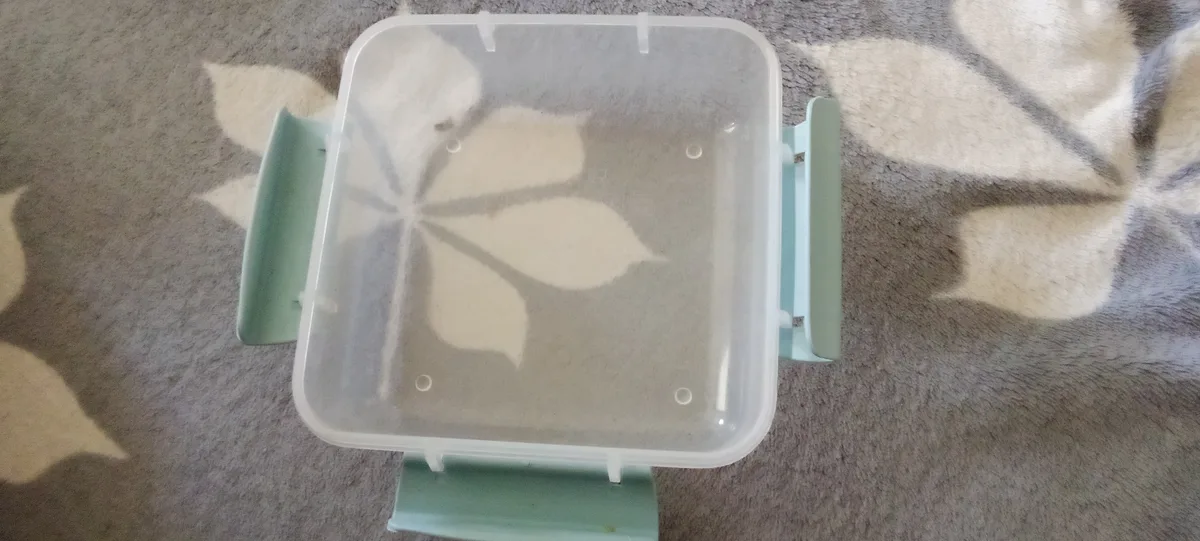
A food container lid organizer can be short enough to fit a drawer while the lids standing inside it prevent that drawer from closing. The useful measurement is the finished arrangement, not just the empty rack. Before shopping for another organizer, sort your lids, measure the clearance above the drawer floor and decide whether upright or flat storage suits the collection. This is a planning guide based on published information, not a hands-on product test.
Start with the actual closing clearance
Measure from the drawer floor to the lowest obstruction above it along the route the drawer follows when closing. Include rails, braces and the bottom of a drawer stacked above. A tall decorative drawer front does not guarantee a tall usable interior. Measure inside width and depth too, then account for the opening through which the organizer must pass. Write these measurements down in inches so a promising listing cannot distract you from a basic mismatch.
Mock up the tallest lid in the right orientation
Stand the largest lid on the drawer floor as you intend to store it. Measure the top edge, including projecting clips. A rack may raise or tilt the lid, so a floor-level mock-up is only the first check. Use a folded cardboard support to approximate the proposed base. If the drawer will not close with comfortable clearance, try placing lids flat before considering a lower rack. Do not force the drawer against a loaded organizer.
Match the organizer style to your collection
YouCopia offers several StoraLid designs and sizes, including options with different divider arrangements. That is a useful reminder that a product-family name is not a dimension. The manufacturer’s YouCopia StoraLid size and design options describes those design differences; use current details for the exact version being sold. For a small set of matching lids, a shallow tray may be simpler than a tall divided rack. Mixed round and rectangular lids may benefit from adjustable compartments.
Allow space to retrieve one lid
A layout that closes can still be difficult to use. Leave enough room for your fingers and check whether the largest lid can be removed without taking out its neighbors. Very tight dividers may organize the collection visually while turning every lunch-packing session into a sorting task. Place frequently used lids near the front and less-used sizes behind them. If you must lift the entire organizer out each time, include the clearance and grip needed for that movement.
Keep only lids that belong to useful containers
Pair each lid with its base before measuring the collection. Set aside unmatched pieces and check whether replacements are available for the exact system. Grouping lids by shape can help, but grouping by the sizes you reach for most often may be more practical. Avoid buying capacity for an accumulation you do not intend to keep. An organizer that holds fewer well-matched lids can work better than one designed around the largest possible collection.
Check cleaning and installation requirements
Read the care directions rather than assuming every kitchen organizer belongs in the dishwasher. The YouCopia StoraLid organizer FAQ specifies hand washing with mild soap and lukewarm water. Its assembly directions also explain how the dividers fit; follow the instructions supplied with your version. Before ordering, compare loaded height, the usable divider spacing, the lift-out path and the return conditions. Skip the purchase if an existing shallow tray already gives you easy access and a drawer that closes.
Frequently asked questions
Does a 3-inch-tall organizer fit every 3-inch drawer?
No. Its loaded height can be much greater once lids stand inside it. Check closing clearance and the tallest lid in the intended orientation.
Is storing lids flat a poor alternative?
Not if you can identify and remove the right lid easily. Flat storage can suit a shallow drawer better than an upright rack, especially with a small matching collection.
Sources & editorial method
We used published documentation for the comparisons and examples in this guide. We have not independently tested these products. Manufacturer instructions for your exact model take precedence over general planning advice.