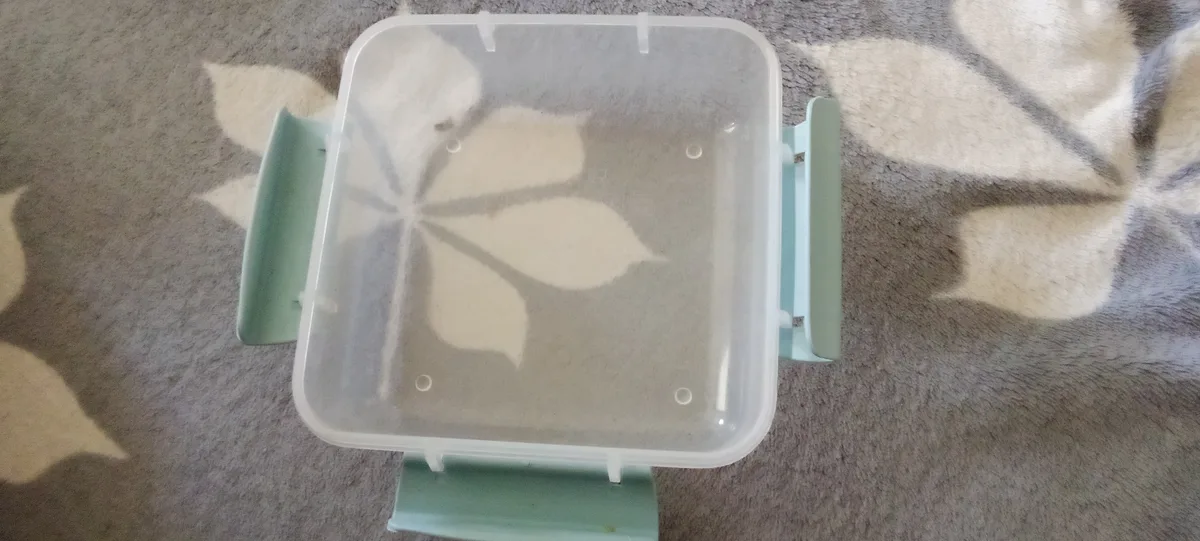
A twenty-piece food storage set may contain ten bases and ten lids, not twenty complete containers. Before comparing bundles, read the itemized contents and translate the headline count into usable closed containers. Then check whether those containers are the sizes you need. A small kitchen can benefit more from a modest collection of repeat sizes than from a large assortment whose smallest and largest pieces rarely leave the cupboard. This is a buying method, not a tested ranking.
Translate pieces into complete containers
Find the list of bases, lids and accessories. Count how many base-and-lid pairs you can use at the same time. As a documented example, Joseph Joseph lists five container capacities with corresponding lids in its Joseph Joseph Nest Lock 10-piece container set. Its ten-piece label therefore describes five complete containers. Other products count pieces differently, so do the arithmetic for each listing rather than applying one brand’s convention to every set. If the contents are unclear, ask before ordering.
Build a portion list before a shopping list
Write down the foods you regularly pack: perhaps lunch portions, leftover vegetables, prepared ingredients and a small sauce. Use your existing dishes or measuring tools to understand the approximate capacities you need. These are personal planning quantities, not nutritional recommendations. Note how often each size is used between washing cycles. If medium lunch containers are always missing while tiny snack boxes remain empty, another assorted bundle may preserve the same imbalance instead of solving it.
Compare usable sizes rather than the biggest number
A bundle with many complete containers can still provide fewer useful portions than a smaller set. Separate everyday sizes from occasional ones, and compare the count in each group. A single container sold separately can fill a specific gap without introducing more lid shapes. For instance, OXO offers individual sizes in the Prep & Go range; see its OXO Prep & Go 5-Cup Container for one example. Check current dimensions and available versions rather than assuming separate purchases are interchangeable.
Check what the collection costs in space
Lay out the largest bases using exterior measurements. Think about the footprint in the refrigerator and the cabinet arrangement when everything is empty. A set is not compact merely because a product photograph shows it stacked. Include the lids, room to grab a base and space needed to separate nested pieces. Consider whether a second bundle duplicates a lid system you already understand or introduces another collection that needs its own compartment.
Look beyond the initial package
Check whether replacement lids or seals are available for the exact system and whether the size names stay consistent across listings. Do not assume a later version uses the same closure. Keep the product information with your household records. Read the care instructions for each material and component, and inspect what arrives against the itemized contents. A missing lid can change the number of complete containers more than the large piece count on the box suggests.
Choose a minimum useful collection
Start with enough containers for your established routine, then add a size after identifying a repeated need. That approach can reduce the risk of buying around an imagined weekly meal-prep schedule. Compare current retailer terms only after the contents and fit make sense. The most helpful value calculation is not cost per advertised piece; it is the usefulness of the actual base-and-lid pairs. A collection that stays manageable is easier to put away and easier to use again.
Frequently asked questions
Do food storage set counts usually include lids?
Many do, but counting conventions vary. Read the itemized contents and count complete base-and-lid pairs before comparing sets.
Is a larger piece count automatically better value?
No. Compare complete containers in the sizes you repeatedly use, plus exterior fit, lid organization and replacement-part availability.
Sources & editorial method
We used published documentation for the comparisons and examples in this guide. We have not independently tested these products. Manufacturer instructions for your exact model take precedence over general planning advice.