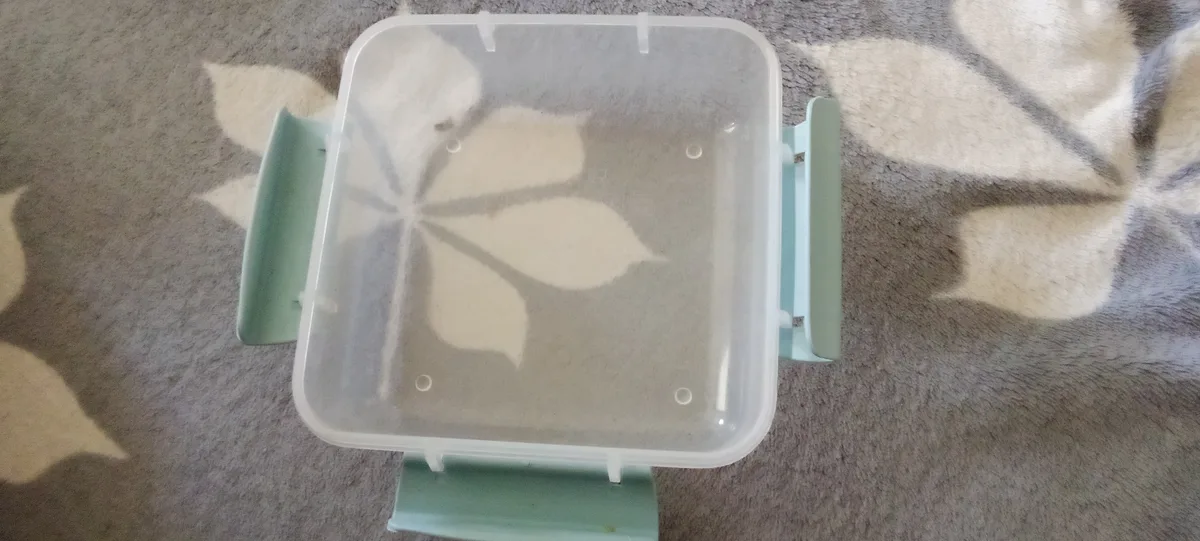
The most useful meal-prep container for a mini fridge is the one you can put away, find and remove without rearranging everything around it. A generous capacity label does not answer that question. Start with the fridge you own, the meals you actually pack and the space required for other groceries. This guide provides a measuring and buying method, not a laboratory-tested ranking of container sets.
Measure the usable shelf opening
Measure clear width, usable depth and the distance to the shelf above. Check the narrowest access point as well as the space inside: a container may fit on the shelf but be awkward to move past a door bin or thermostat housing. Leave ventilation paths and any required clearances as the refrigerator manufacturer specifies. Record fixed obstacles instead of assuming the full interior width is available. Repeat for each shelf because mini-fridge interiors are often irregular.
Compare the outside of the closed container
Use exterior length, width and height, including handles, latches and the lid. Internal volume describes what the container holds; it does not establish the footprint. For example, OXO describes the closure and handling features of its Prep & Go range, but those features do not prove fit in your refrigerator. Check the exact size and model rather than applying one container’s dimensions to an entire collection. See the OXO Prep & Go 5-Cup Container for product-specific details.
Test a layout before buying a bundle
Create a paper rectangle representing each candidate container’s outer footprint. In an illustrative shelf space measuring 14 by 11 inches, two containers measuring 7 by 5 inches could fit geometrically in one orientation. That is only a planning example: it ignores hand access, obstructions and refrigeration requirements. Use the actual measurements from your shelf and candidate product, and leave enough room to lift the next meal out without disturbing open ingredients.
Plan for empty storage and your washing routine
Containers need a home when they are empty too. Decide whether you prefer a small set of repeat sizes or a nesting collection. Count lunches between dishwashing cycles, then consider how many bases and lids you can dry and store comfortably. Buying enough containers for an ambitious weekly routine can crowd a small fridge before you establish that routine. Start with the portion sizes you already use and expand only when a real shortage appears.
Read care instructions separately from fridge claims
A container’s suitability for cold storage does not make every part appropriate for every heating method. Rubbermaid’s Brilliance plastic guidance distinguishes reheating from cooking and gives venting and handling instructions. Follow the instructions for the exact container, not a general assumption about plastic or glass. The Rubbermaid Brilliance care instructions is one example of why care documents matter. Also check the refrigerator manual before treating an ice compartment as a full freezer; this guide does not establish food-storage temperatures.
Choose the smallest system that solves the problem
Shortlist containers only after checking closed exterior dimensions, the useful sizes included, empty storage, lid management and cleaning requirements. Skip sets whose listings give only capacity when shelf fit is your main constraint. If two options fit equally well, choose the one that makes your next meal easier to retrieve. A neatly packed refrigerator is not automatically a convenient one, and leaving some room unfilled can be more useful than maximizing the number of boxes.
Frequently asked questions
Are rectangular containers always best for a mini fridge?
Not always. They can be convenient on rectangular shelves, but usable fit depends on your fridge’s obstructions, the container’s exterior shape and how you retrieve it. Make a paper layout before choosing.
Can I judge fit from cup capacity?
No. Two containers with similar capacities can have different heights and footprints. Obtain exterior closed dimensions including the lid and latches.
Sources & editorial method
We used published documentation for the comparisons and examples in this guide. We have not independently tested these products. Manufacturer instructions for your exact model take precedence over general planning advice.