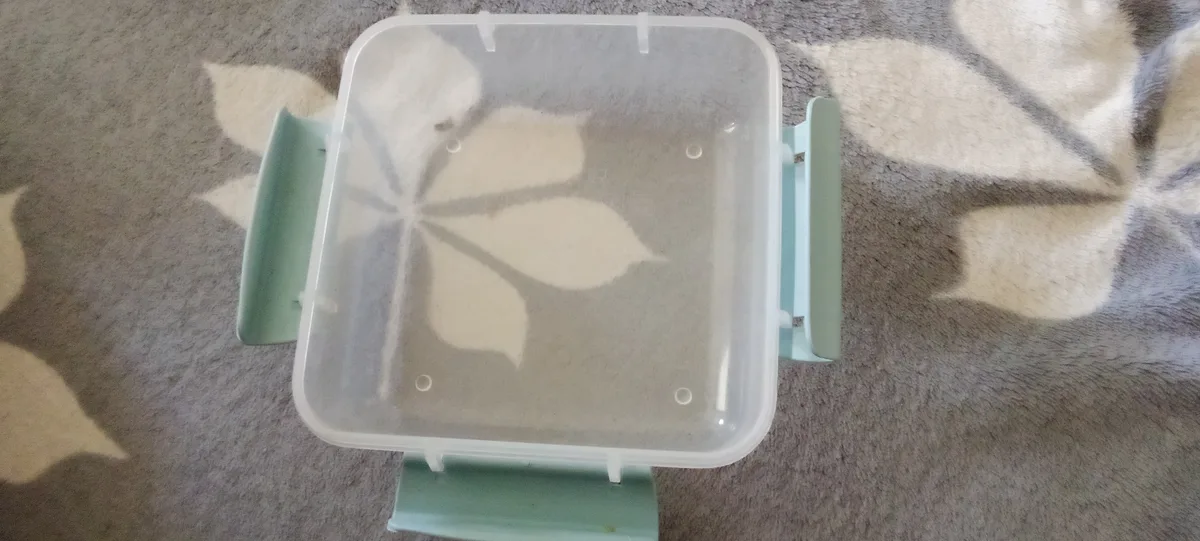
Stackable and nesting describe two different jobs. Stacking helps organize closed containers holding food. Nesting helps store empty bases inside one another. A set can do one job well and the other poorly, so the better choice depends on where your kitchen runs out of room. Compare your refrigerator and your container cupboard separately rather than treating a single space-saving label as the answer. This guide uses manufacturer information and practical planning, not independent product testing.
Define the space problem first
If most of your containers are full throughout the week, a stable arrangement in the refrigerator may matter more than compact empty storage. If you regularly empty and wash containers, the cupboard footprint may be the bigger issue. Neither priority is universal. Count how many containers are usually full, how many are empty and which sizes you use. A set chosen for an occasional large meal can be inconvenient for the way you eat every other day.
Compare filled stacking with empty nesting
Look for images or diagrams showing both arrangements. A photograph of closed boxes in a tower proves little about where the empty bases go. Conversely, a tightly nested collection may use different lid shapes that need their own storage area. Joseph Joseph describes a nesting design and color-coded snap-together lids for its Joseph Joseph Nest Lock 10-piece container set. Those are useful features to verify, but they do not establish that every nesting set organizes lids in the same way.
Do not confuse shared lids with color coding
Color coding can help you pair a lid with its base. Interchangeable lids mean the same lid fits more than one specified container. These are different benefits. If your priority is fewer lid sizes, find an explicit compatibility statement for the exact product system. Do not assume that two lids from the same brand fit because they look alike. Replacement parts may also differ across generations, so retain model or size details when you buy.
Measure the whole empty collection
Record the footprint and height of the nested bases, then add the lids and space needed to remove a frequently used size. Imagine a collection whose largest base occupies an 8-by-6-inch rectangle; the actual cupboard requirement is larger if the lids sit beside it or if you need to lift the tower out. This is an illustrative planning example, not a product specification. Try a cardboard outline on your shelf before comparing the largest bundle sizes.
Consider materials, cleaning and accessibility
Stacking behavior is not the only decision. Check weight when loaded, the strength of the shelf, latch operation and how easily individual containers separate. Read care directions for lids and bases individually. Rubbermaid’s Rubbermaid Brilliance care instructions includes product-specific heating and care requirements; the presence of a stacking feature does not override those instructions. Consider whether you are willing to wash several differently shaped lids, seals and bases after an ordinary dinner.
Choose a repeatable routine rather than the tallest tower
A few sizes that fit your meals can be more manageable than many sizes that fit inside each other beautifully. Prefer an arrangement where a full container comes out of the fridge without unstacking the entire shelf and an empty base comes out of the cupboard without a cascade. If neither system improves your routine, keep the useful containers you own and change their storage layout first. Buying another set is optional; a clearer system is the actual goal.
Frequently asked questions
Can a food container set be both stackable and nesting?
Yes. Check how the closed containers stack and how empty bases and lids store. Evaluate each arrangement separately.
Do nesting containers always share lids?
No. Some use separate lids for different sizes. Color-coded pairing and interchangeable lids are different features, so verify the exact system.
Sources & editorial method
We used published documentation for the comparisons and examples in this guide. We have not independently tested these products. Manufacturer instructions for your exact model take precedence over general planning advice.