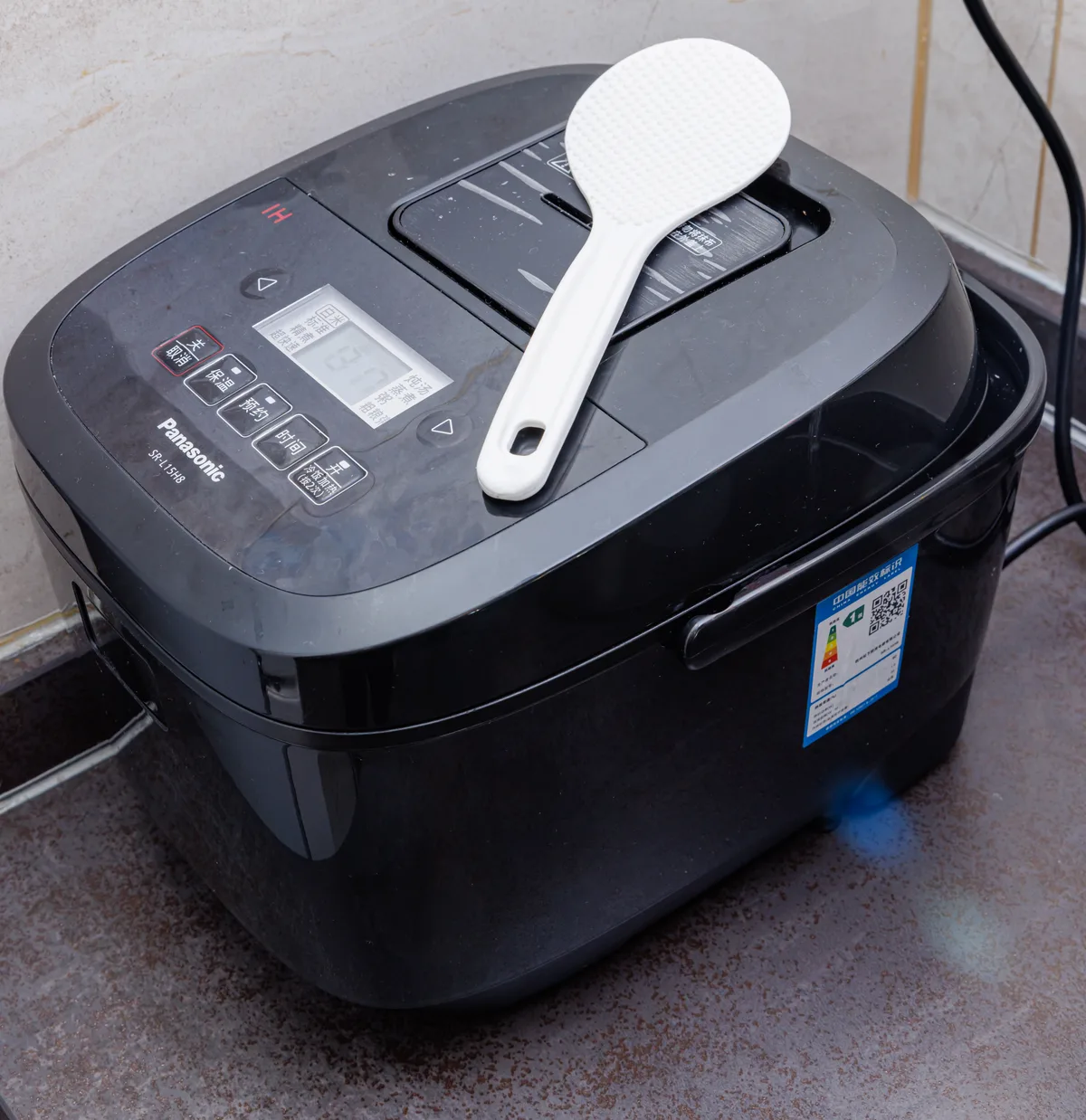
A rice cooker for one person should make an ordinary meal easier without consuming more kitchen space than the job deserves. The useful purchase starts with your rice, your portion and your cleaning routine. It does not start with a universal “best for singles” label.
Use this checklist to narrow a short list. This is a source-based buying framework, not a hands-on ranking. Features mentioned in manufacturer materials describe a product’s design; they are not independent proof of cooking quality.
Define the job in one sentence
Write a requirement such as “I cook a small white-rice batch several evenings a week and want a straightforward cleanup.” If you regularly prepare brown rice, oats or planned leftovers, name that requirement instead. This short statement keeps secondary functions from taking over the comparison.
Record your normal dry quantity with its unit. Then check both the smallest and largest permitted amounts for the relevant program. The NS-LGC05 manufacturer page, for example, identifies several rice-related menus and a compact three-cup maximum. It remains important to check the operating table for the exact food and amount you use.
Decide which convenience features matter
Separate “I will use this weekly” from “this sounds appealing.” Timers, displays and extra programs can be worthwhile, but the benefit depends on your schedule and whether the instructions support the food involved. Do not assume an unattended delay is appropriate for every ingredient simply because a timer exists.
Keep-warm deserves the same scrutiny. Consult the model’s menu-specific instructions rather than treating it as an unlimited holding setting. If you normally serve immediately, do not let an elaborate keep-warm feature outweigh simpler requirements such as a readable control panel or convenient removable parts.
Inspect cleanup before ordering
Open the manual’s cleaning section and list the parts you must remove or maintain. Check which pieces are hand-wash only and whether a replacement inner pot or lid component is available for the exact model. A familiar brand name does not guarantee interchangeable parts between generations.
Imagine doing that cleanup after a normal dinner. Consider where the parts will sit while drying and whether the serving utensil has a convenient home. A single-person appliance still introduces accessories, and their routine matters more than a photograph of a tidy closed machine.
Give the cooker a realistic location
Measure the closed body, lid-opening access and manual-required operating arrangement. For the NS-LGC05 instructions, review the placement and steam cautions rather than inferring suitability from closed height. Other models can have different requirements.
If you intend to store the cool appliance in a cabinet, check the opening and how you will lift it before use. Keep operating and storage plans distinct. An appliance that is easy to put away can still be inconvenient if every meal requires rearranging half the counter.
Compare ownership rather than feature count
Create a final note for each candidate: supported usual batch, relevant rice menus, placement verified, cleaning acceptable, exact replacement parts identified and reason to skip. That last item is useful. A product with excellent-looking specifications may still be wrong for your portion, reach or kitchen layout.
Verify the seller, US model and current purchase terms when you are ready to buy. Do not use a temporary discount as a reason to ignore an unanswered question. For one-person cooking, a modest, well-understood setup often makes a stronger everyday choice than a larger collection of features you rarely need.
Frequently asked questions
Should one person always choose the smallest cooker?
No. A documented everyday batch, suitable operating arrangement and practical cleanup can matter more than the smallest external body.
Is keep-warm appropriate for every menu?
Check the exact model’s instructions. Different foods and menus can have different restrictions.
Sources & editorial method
We used published documentation for the comparisons and examples in this guide. We have not independently tested these products. Manufacturer instructions for your exact model take precedence over general planning advice.